Henry Thompson (1827-1908)
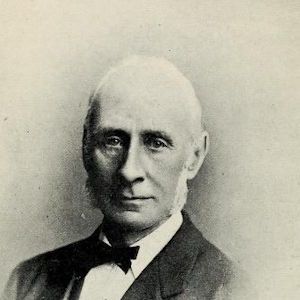
Written by Gillian Thompson
Occupation: Schoolmaster
Academic Preparation and Teaching Career
Born in Rawdon, near Leeds, Henry Thompson spent his childhood in his birthplace, the descendant of mill owners and clothiers of that village. Some of them were early importers of Australian wool; their extended family included a founder of the Black Ball line of packets which operated between Liverpool and New York from the early nineteenth century. As a small boy, Henry went to the Little School in Rawdon and had lessons from the vicar. He then, from age 13, attended Ackworth Friends' School in Pontefract, near York (founded 1779), first as a scholar, later as an apprentice teacher. He subsequently enrolled in the Flounders Institute (the teacher training school associated with Ackworth), served as a master at Ackworth for three years, and taught at the Grove House Friends' School in London for a year. In 1855, he became a master at Stramongate Friends' School for boys in Kendal (founded 1698) located at 58 Stramongate, at the invitation of his Ackworth school friend and mentor, Henry Wilson (1822-1907), whose sister he married on Christmas Day, 1856. Wilson had recently replaced Samuel Marshall (1791-1869) as Head, but he soon gave up that responsibility to devote himself to civic politics in Kendal. Henry Thompson and his wife, Esther Emmott Wilson (1831-1909), remained at the school. Henry acquired houses at 62 and 64 Stramongate, which he combined with the school's holdings for the period – 1860-1878 – while he and Esther served as joint Heads. Known as "Henry Thompson's School", Stramongate was regarded, in those years, by Quaker and non-Quaker parents, as a highly satisfactory alternative to larger Quaker schools, such as Ackworth itself. The number of pupils increased under the Thompsons, to perhaps 100 day boys and 70 boarders by the mid- 1870s. Boys and parents alike were grateful for the kindness of Mrs Thompson, who was active throughout the school, most notably in the kitchen, the refectory and the sick room. Members of Stramongate School long remembered Henry's commentaries on readings from Holy Scripture – particularly on the journeys of St Paul – which were the highlight of school assemblies. They also recalled school outings, involving travel by train and coach, and long rambles in remote countryside, sometimes in the fells. And that Henry, whose sound judgment and exquisite courtesy were valued by his associates throughout his life, often behaved rather like a schoolboy himself. In retirement at Arnside, into the late 1880s, Henry home-schooled his youngest daughter and son, as well as the children of two non-Quaker neighbours.
Why Arnside
Henry and Esther retired to Arnside on Morecambe Bay with their seven surviving children in 1878, two years after an epidemic of scarlet fever caused the death of three members of the school, including their own six year-old son. They had become acquainted with Arnside two decades earlier, when it was a fishing village of fewer than 300 inhabitants, and they regarded it as a healthier place than Kendal. Now, in the late 1870s, the extension of the railway enabled them, as well as members of other middle class families previously resident in Kendal, to live in Arnside, to maintain their connections in Kendal, and to travel to other parts of the country. In Arnside, Henry designed and oversaw the building of the house called Brantfell on the Red Hills Road, where the Thompson family lived from 1880 until they moved into Dungarth, which Henry also designed and built on the same property, but closer to the cliff, with even better views of the bay and the fells beyond. There, from 1894, Henry and Esther lived with their three unmarried daughters and could offer temporary accommodation to their married daughter and family, and their three surviving sons. The Henry Thompsons were still occupying both houses when their eldest son, in India since 1885, returned to England for a short visit in 1894, before setting out for South Africa, where he died in 1903. They were well-established at Dungarth when, shortly after the death, in Manchester in 1896, of their second son, two very young grandchildren came to live with them. In their turn, Henry and Esther died at Dungarth in October 1908 and April1909. They were buried in Kendal. In 1910, the unmarried daughters and the grandchildren moved to Kendal, but the break with Arnside was not yet complete. Henry and Esther's four daughters and their youngest child – the only son who outlived them, by then established in Canada with his family – retained an interest in Brantfell until 1917. Sometime after that, a member of the Crossfield family acquired the house and Brantfell bears the name Crossfield House in the twenty-first century. Dungarth no longer exists.
Local Politics
Never during his thirty years in Arnside was Henry idle. With the enthusiastic encouragement of his friend Henry Swinglehurst (1820-1895), owner of Sedgwick Powder Works at Hincaster, Henry Thompson was an active supporter in Arnside and environs of the Liberal Party of W.E.Gladstone and of his policy of Home Rule for Ireland. Henry also took part in local politics, serving on the parochial council of Arnside from the early 1880s. He was involved in decision making regarding drainage and water supply and public works, as well as in the choice of the people's warden and the management of the local, non-denominational school, not to mention trying to reconcile the aspirations of members of the vestry and the school teacher with arbitrary decisions imposed by the rector. Henry was a Justice of the Peace at Milnthorpe, from 1890. In 1897, having gained more votes than his fellow Quaker, the locomotive engineer William Worsdell (1838-1916), Henry was elected to represent Arnside on the South Westmorland District Council. He had received 75 votes; Worsdell, 34.
On Education
Education remained Henry's chief concern throughout the Arnside years. In celebration of its first century, he published a history of Ackworth School. As a Guardian of the school, for almost thirty years (c1878-c1907), he regularly left Arnside three or four times a year to attend meetings of the committee of management at Ackworth. He also met representatives of the school during their regular visits to Arnside and Kendal. He worked easily with the Superintendent, Frederick Andrews (1850-1920, Superintendent 1877-1920), whom he temporarily replaced, for a few weeks, in 1888 and at a later time. He corresponded with experts on educational questions at home and abroad. Henry was particularly influential in determining the curriculum for the boys' side of the school. In the mid-1880s, he helped to bring about an increase in the time spent on the study of both Latin and Science. He argued against rote learning and standardised examinations and in favour of encouraging boys to develop their ideas in written composition and oral discussion. As President of the Ackworth Old Scholars Association for 1887, and throughout his time as a Guardian, he made useful suggestions to the Friends' Central Education Committee and sought improvements in Quaker education throughout Britain. By 1888 he was reading women theorists on women's education and recommending that girls educated at Ackworth should engage in intellectual pursuits, even after they left school. He thought Quaker parents should bear a greater share of the cost of their children's education, so that Quaker schools could pay their best masters at competitive rates. His main object was to ensure that Quaker young men were qualified and otherwise able to attend the universities. Even after he left Kendal he remained an advocate for Quaker education there. He knew that Friends had been in charge of secondary education in that town since time immemorial. It saddened him that people who, by the late 1880s, wanted the Church of England to take-over and reinvigorate the local grammar school at the expense of Quaker education in Kendal – as did happen in the 1890s – were former Quakers. They were beneficiaries of the broad and liberal Quaker education which they were now ready to sacrifice.
Life in Arnside
In Arnside, as in Kendal, Henry was a frequent chairman or speaker at public meetings of all kinds. And the Thompsons' home was always open to friends and associates and to their neighbours. Among others, Henry documented visits to Arnside by Liberal politicians and Liberal supporters, and by Quaker and non-Quaker businessmen and their families. Some visitors he had known at Ackworth; others had been his pupils at Stramongate, still others were new acquaintances. He also recorded details of his own and his family's experiences in the village and much about the lives of other Arnside residents. For instance, he wrote about the concerns and actions of his friend, Robert Fisher Thompson (1833-before 1911), the Kendal solicitor who, with his family, took up residence at Inglemere in the early 1880s. The village which Henry depicted grew from 300 to 1200 residents while Henry and Esther lived there. It was a place in which members of the middle classes – including some, like the Henry Thompsons, of relatively modest means – were able to have substantial houses and lead active lives as engaged members of an established community. Such people were at ease with each other and with the old timers – fishermen, craftsmen, inn keepers, farmers and landlords – and were increasingly influential in the affairs of the village. Henry's diary provides an evocative description of life in Arnside, in which he played an important role and where general harmony was sought and often achieved. And yet – something which Henry deeply regretted and actively opposed – landlordism continued to be the dominant social force in Arnside and its hinterland throughout the nineteenth century, even after the introduction of the secret ballot in 1872 and the extension of the franchise to all men by 1884. Henry deplored a system which could arbitrarily deprive established freeholders of the right to farm the land their families had held for generations. Nor had he much patience with the unearned privileges of the clergy of the Established Church.
Quaker, Diarist, Gentleman
Letters to his daughter Lilias, written by Henry from Arnside, include statements of the religious faith he hoped she shared, and which he and Esther otherwise communicated by example. It is primarily as a diarist that Henry may be re-discovered and remembered in the present century. Besides documenting Arnside life, his diary includes detailed observations of natural phenomena, of developments in the industrial arts and in medicine, and of paintings on display in public galleries and private studios and homes, as well as his remarks on modern English and French literature. It contains notes on public events and remarkable occasions in Westmorland, in the cities of the North and in London, as well as Henry's commentary on international relations and national politics. Henry's importance in the history of Arnside was stated in his 1908 obituary: "He was as assiduous, practical and painstaking in the management of rural affairs as he had been in the conduct of the school; and he was, for many years, the centre round which revolved all the village life of Arnside". The writer of the 1909 obituary (which also summarised Esther's significance) described him as: "Scholar, Christian, Gentleman".
Sources
Publicly held documents:
- The Annual Monitor for 1909, Being an Obituary of Members of the Society of Friends in Great Britain and Ireland (London: Headley Brothers, 1908), 152-164.
- "Annual Report of the Ackworth Old Scholars' Association" (no. 28, 1909), 102-106 (Obituary of Henry and Esther Emmott Thompson).
- Census of England and Wales 1871-1911 parish of Beetham, village of Arnside.
- Census of England and Wales 1851-1911 town of Kendal.
- Cumbria Archive Centre, Kendal. Accession number H16674, Reference number WDX 2106, Transcription of Diary of Henry Thompson of Arnside for 1885-1888 (c500 pp typescript).
- Thompson, Henry. Address to the Ackworth Old Scholars, 28 June 1887, in "Proceedings of the Ackworth Old Scholars' Association", Part VI, Seventh Month, 1887, 3-18.
- Thompson, Henry. A History of Ackworth School (London: Samuel Harris, 1879), 355 pp.
- Thompson Priestman, Jessie. writing as S. G. Arnold, Little Jenny Jarrold (London: Melrose, 1910), 248pp.
Privately held documents
- Thompson, Alwyn Stonehouse. Unpublished diary, 6 April 1897 and 22 November 1917.
- Thompson, Henry. Unpublished letter to his parents, 2 September 1859.
- Thompson, Henry. Unpublished letters to Lilias Thompson, 27 October 1883 and 28 October 1893.
- Thompson, Lilias. "The Thompson-Wilson Family" (1919) 139 pp. Unpublished typescript circulated to the children and grandchildren of Henry and Esther Emmott Thompson in 1919.