Charlotte Mason (1842–1923)
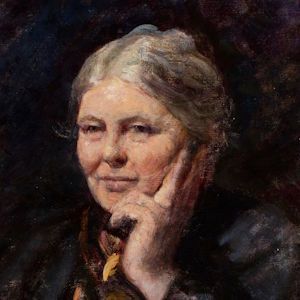
Written by Gabrielle Cliff Hodges
Occupation: Founder of the Parents’ National Educational Union (PNEU)
Background
Charlotte Mason moved to Ambleside in 1891. There, in 1892, she established her House of Education. Later, she acquired the beautiful large building which she named ‘Scale How’ and where the Parents’ National Educational Union (PNEU) was thereafter based.
Several things motivated Charlotte Mason to develop the PNEU. Educational standards, especially for girls and women, though gradually improving were still commonly poor in the latter part of the nineteenth century; governesses, in particular, were much despised. Moreover, since women and girls were often financially dependent on men such as their husbands or brothers they were highly vulnerable if their menfolk died or fell on hard times: teaching or being a governess were among the very few work options open to them. Furthermore, low expectations for women meant that they often faced a stifling existence without purposeful work.
Early life
Mason initially experienced many such challenges herself. However, Margaret Coombs, a recent biographer, has shown that Mason also kept hidden things she felt might be detrimental to her career, for example being illegitimate. Her parents subsequently married but both died early in her life leaving her an orphan. Although she had numerous half-brothers and half-sisters from her father’s previous two marriages, she preferred to represent herself as an only child. Mason also came from a mixed religious background: her mother, Margaret Shaw (1818-1858), was a Catholic and her Irish father, Joshua Mason (1780-1859), a Quaker, but she kept that quiet and became a fervent Anglican herself, despite the extent to which her Quaker heritage may have informed her thinking. Unsurprisingly, she kept the downfall of her father a secret, too. Although initially a merchant in Waterford, he was later the unsuccessful proprietor of a water-powered mill in Staplestown.
On completing formal education, Mason continued as a pupil-teacher in her own elementary school from 1854-1859. However, pupil-teachers were usually held in disdain, so she chose never to reveal her pupil-teacher work, even though she later underwent teacher training and taught in a college of education herself. She eventually became a fully-fledged teacher, sole mistress of an infant school in Worthing. Later she sometimes assisted a friend who was home educating three young children whose parents were in India. Drawing on all these experiences, she became critical of education which underestimated children’s intelligence and force-fed them with facts. She wanted children’s education not only to be the best that it could be but also to be provided for all children.
In 1890, Mason’s ideas began to be promulgated via a monthly journal called Parents’ Review. She made clear – perhaps as a result of her experience of home educating – that parents’ involvement with their children was crucial. This led to her founding the Parents’ National Educational Union (PNEU) which provided courses and materials to assist parents with their children’s home education. She also argued that children be treated as ‘persons’. To that end, she dedicated the remainder of her life to the PNEU, emphasising the training of governesses, education for parents and – crucially – respect for young learners.
The PNEU
Although Mason established the PNEU, and was perceived as its figurehead, she did not work alone. She had a great capacity for friendship, drawing in diverse people who assisted her. Some of those who worked within the PNEU were wealthy philanthropists like Henrietta Franklin (1866-1964) and Emmeline Steinthal (1856-1921), with whom Mason sometimes disagreed but without whom the PNEU would not have flourished. Mason also befriended professionals like Annie Clough (1820-1892), Principal at Newnham College, Cambridge, and Oscar Browning (1837-1923) of King’s College, Cambridge. She was strongly supported, too, by expert administrators like Elsie Kitching (1870-1955).
Mason liked to maintain that PNEU principles were her own original ideas. However, she was, of course, familiar with the work of other thinkers like Locke, Rousseau, Pestalozzi and Montessori, as might be expected from someone who had undergone training at the Home and Colonial Training College and taught at Bishop Otter Memorial Training College.
Mason also became friends with people in the wider educational world, such as Horace Household (1870-1954), Secretary of Gloucestershire Local Education Authority. He was an intelligent educationalist, but also became a committed PNEU supporter, introducing the PNEU to Gloucestershire schools. Evidence shows how well it could work in the right hands, eventually also permeating working-class elementary schools, for example in urban areas in northern England or rural communities in Gloucestershire. Fiona Mead’s research, published in 2011 as Peas, Pigs & Poetry: How a Gloucestershire Village School Gained International Recognition, draws on evidence from one such school. Interviews with former pupils show how Mason’s principles appear to have worked in practice. With the full support of the active, though somewhat retiring headmaster, Alfred Driver, the school benefited from much that the PNEU had to offer, not least the many books they sent from which these rural working-class children had so much to gain (alongside successfully keeping and rearing pigs and poultry as well as playing sport and writing and editing a school magazine, amongst other things). The book includes a telling quotation from Household himself which encapsulates much that the PNEU stood for. The school is, he writes,
one of the schools which has applied with the fullest understanding and confidence the principles of Miss Mason, who has shewn [sic] us that the children can do so many things that had been thought too difficult for them without any obtrusive help, if only we will let them.
PNEU pedagogy
Mason remains the figurehead associated with the PNEU and some of her educational beliefs endure to this day, especially among home educators in the United States and a small handful of private schools in the United Kingdom. However, time has taken its toll on some of her other ideas. For example, her specific religious outlook or her colonially blinkered attitudes to various peoples in different parts of the world are no longer palatable to many contemporary educators. Some tenets, though, remain surprisingly modern and would sit well in many current classrooms, for example, the PNEU skylark logo with its accompanying motto (‘I am, I can, I ought, I will’) which affirms the PNEU’s desire that all young learners should rise high and be assertive.
Charlotte Mason’s philosophy
Mason wrote at length about her ideas, often effusively and at times unsystematically, for example in An Essay Towards a Philosophy of Education, published posthumously in 1925. The book is not easy reading but includes some of Mason’s powerfully resonating tenets. She was, for example, passionate about children reading literature, arguing that ‘the object of children’s literary studies is not to give them precise information as to who wrote what … but wide spaces wherein imagination may take those holiday excursions deprived of which life is dreary’. To that end, too, she arranged for the PNEU to send out plentiful books for readers to enjoy and which would facilitate learning. Moreover, she argued that young readers should narrate to their teachers what they have taken in from a single hearing of a text, not to check whether they can recall it accurately but for the teacher to learn what they have understood. The curriculum she advocated was varied and included outdoor learning, art and science; above all, however, Mason argued that children need literature to nourish their minds and activate their imaginations.
In addition, she was adamant that learners make connections between different areas of knowledge, that is, they should be ‘intelligent’, not simply acquisitive. Young people learn from whatever the atmosphere is around them, she argued, not from specially tailored, child-centred contexts which she felt were patronising. Learners should be disciplined and attend closely to things. Education becomes, then, a lifelong process which sustains and nourishes learners intellectually. Mason wanted the same for teachers as well. She told Oscar Browning that she liked her students using his educational theories textbook because she wanted them ‘to be intelligent members of their profession’. Intelligence, in the original meaning of the word, was critical for her.
Some examples of Charlotte Mason’s writing for young learners
Although Mason was apparently a keen reader herself, it is interesting to ask to what extent she herself created ‘living’ books when writing textbooks for young learners. What follow are five brief examples of that writing. The first four are from an 1884 book, Geographical Readers: Book I Elementary Geography. They tell us something about her pedagogy with its emphasis on intelligent learning.
Here, for example, is Mason encouraging readers to take an aerial view of their home town. Almost like a picture book writer, she invites them to consider the view from the perspective of a skylark while simultaneously teaching about both scale and points of the compass.
Suppose that a lark, who could think, were flying over your town away up in the sky, and paused overhead for a moment to see what there was below him ... Everything would look very small because he would be so far off …
Drawing readers’ attention to the map of Chichester in the textbook she tells them that they will see a round dot, marked cross on it:
… that is the beautiful old cross of carved stone which stands in the middle of the city, and from which you may look down the four chief streets … East Street, towards the east, where the sun rises; West Street, towards the west, where he sets; North Street, towards the north; and South Street, towards the south.
Always, Mason encourages learners to accumulate ‘the things that intelligent people like to know’, not merely for their own sake but because such things lead to further learning. For example:
People like to know, also, where the wind comes from, as that enables them to judge what kind of weather may be expected …
You may get very ready in noticing the directions of places by a little practice. Notice how each of the windows of your school faces, or each of the rooms in your home; the rows of houses you pass on your way to school; and which are the north, south, east, and west sides of churches. The direction of places, the way buildings look, and the way the wind blows, are among the things that intelligent people like to know.
Meanwhile, inside the home, Mason suggests:
Some evening hold an orange close to a candle, and you will see exactly half the orange made bright with the light ... Run a knitting needle through your orange, and turn the orange very slowly round on the needle before the candle. Half is always in the light; half, in the shade ... This movement of the earth is called its diurnal motion. Diurnal means daily; motion is movement.
Here, readers are to learn a complex concept not by being told about it, but by making, observing and understanding a working model. She imagines having a variety of simple objects available for children’s use, encouraging them to engage actively in their learning and, above all, pay close attention to what they themselves – not an adult – are doing.
In another extract again, Mason shows that she sees learning from a child’s perspective (although she does not assume that all children have identical experiences):
Most likely you know the pleasure of being on a hill-top; of the rest, after a long pull up hill, when you look round and see the villages you know dotted about quite small in the distance; and then of the scamper about with the fresh wind blowing in your face.
This is not just textbook information about what familiar things look like at a distance. Instead, Mason acknowledges learners’ lived experiences, making connections between what is already known and what is still to be learnt.
In the final example – from Book III in her Geography Books series, ‘The Counties of England’ – she seems very keen to activate the reader’s imagination. She adopts a different approach to those above, creating what she elsewhere calls a ‘living picture’. She writes:
The market-place of Keswick or of Ambleside is a merry scene on a bright morning, when the coaches are about to start. There they are: Ullswater coach, Coniston coach, Windemere coach, Keswick coach – each with its four fine horses. The gay passengers crowd round, everybody mounts to the top, ladies and all – happy they who get the front seats – and, with a merry blast of the horn, off goes the coach.
Mason makes use of very immediate language such as ‘There they are’, almost as if the reader is standing beside her, or by exclaiming ‘happy they who get the front seats’. Finally, she turns the reader’s viewpoint through 180 degrees, grammatically, using the first-person plural, as she writes:
Not leaving us in the market-place, though: we have secured the box seat on the Keswick coach.
Thus, she transports the reader alongside her, onto the box seat of one of the coaches (i.e. the one outside for the coachman, raised so he could see the road over the heads of the horses). From there, the viewpoint is obviously very different than from inside the coach or behind the coachman. If, today, this moment were re-created, the technology of choice would probably be a hand-held movie camera.
Charlotte Mason’s memorial
Charlotte Mason is buried at St Mary’s Church in Ambleside, the Cumbrian town which was her home for almost thirty years and where she enjoyed the companionship of many people within and beyond the House of Education, not least those who also lived in or around Ambleside such as Mary Louisa Armitt (1851-1911), founder of the Armitt Library in Ambleside, Frances Arnold (1833-1923) sister of Matthew Arnold and Gordon Wordsworth (1860-1935), grandson of the poet.
Despite the shortcomings, there remains a significant legacy from Mason’s educational ideas, not least the respect and autonomy which, with support from intelligent, well-educated teachers, she encouraged for the development of lifelong learners. She therefore deserves to be remembered.
Postscript
Some years after Mason’s death, the House of Education became Charlotte Mason College and, today, forms part of the Ambleside campus of the University of Cumbria. It was the venue of the initial meeting in 1998 of the Dictionary of Cumbrian Biography.
Sources
- Essex Cholmondley, The Story of Charlotte Mason, 1960
- Margaret Coombs, Charlotte Mason: Hidden Heritage and Educational Influence, 2015
- Elieen Jay, The Armitt Story, Ambleside, 1998
- Charlotte Mason, Geographical Readers: Book I Elementary Geography, 1881
- Charlotte Mason, The Ambleside Geography Books: Book III Counties of England, 1913 (New Revised Edition)
- Charlotte Mason, An Essay Towards a Philosophy of Education: A Liberal Education for All, 1925
- Fiona Mead, Peas, Pigs & Poetry: How a Gloucestershire Village School Gained International Recognition, 2011